Showing posts with label Nursing. Show all posts

Wednesday, November 14, 2012

A Siblings Memory of Birth 3 Years Later


 All three of my older children ages 6,4 and 2 were present at the birth of my last baby 3 years ago. I prepared them with easy discussion about birth and had them watch a few birth videos to be prepared for the fluids and sounds. When the time came I still wanted them there. As typical for my labor pattern he was born mid morning. I wondered what the long term memories would be for my children as they were so young when Oliver was born. I was pleasantly surprised by what memories she had.


This is what my daughter age 6 at the time remembers from the birth written in her own words.

     What I remember about my baby brother Oliver’s birth is waking up when it was still dark, that is very strange for me because I am usually a sleep in late. I crept up stairs to go cuddle with my mom. When I looked in her room she was not there so I went back to bed.
After a few hours I went back up the stairs to see where my parents where. I found them in the bathroom surrounded in people I knew as midwives and doulas such as Ms. Hopper, a friend of my mothers and a mother of one of my many friends who is also midwife and Ms. Janet, a friend of my mothers and a mother of one of my many friends who is also a doula. There was also someone there taking pictures.

     My mother was in the bathtub and she explained that the baby was coming out. She would close her eyes when she felt some pain and then would talk to me and everyone else in the room in between. I was just about as excited as a six year old could be without exploding! I had heard quite a few things about this baby. My third brother, finally coming although I didn't know he was a boy at the time! I mean what could be more exciting than that?!

     As always the birth took forever but I amused myself with drawing a picture of what I hoped my younger sibling would look like. I also came up with a list of names that I liked for the baby. While I did that my other two brothers where busy watching a movie upstairs. When it was actually time for the baby to come out my brothers ran into the room just in time to see my mom and dad catch my baby brother in the bath tub. I couldn't see much because he was born in the water. He cried and cried after they put him on my mom's chest. He was so cute.
Another thing I was excited about was the fact that my mother said I could snip the umbilical cord! After having two brothers I wanted a baby sister but that didn't happen.
     When Oliver finally came out of the tub out we wrapped him in a red towel. I sat on the bed with my mom holding my new brother and watched the midwife do an examination of the baby to make sure he was healthy. I loved watching him nurse he looked so happy.


So sweet and so perfect. I am so glad she got to be there for that special event.

Monday, November 12, 2012

13 Ways to Keep Your Newborn Cold and Flu Free this Winter

With the Holidays often come colds and flues.  The last thing you want to deal with is an ill newborn or infant. Consider these 13 tips to keep your newborn healthy. After all you birthed your baby at home to avoid exposure to hospital super bugs lets keep her healthy.

1. Exclusively breastfeed. Hint: exclusively means only milk no solid food. Exclusively breastfeed for a minimum of 6 months and continue nursing into your babies toddlerhood. The same antibodies and amazing nutrients your breastmilk has when your baby is a newborn is still helpful when your baby is 13 months old. Breastfeeding is also insurance through an illness that your baby is still getting some good qulaity nutrition even if they are vomiting or don't have much of an appetite.


2. Wear your baby. Keeping your baby close to you limits other people exposing their germs to your baby. A person is also much less likely to touch your baby if your baby's head it two inches away from your breast. 


3. Keep your baby dressed warmly but not too warmly. Overheating is as difficult on your babies immunity and physical well being and being too cold. Your newborn and young infant will be comfortable in one more layer than you are. So if you are wearing long sleeves and pants consider putting the same on your baby plus a little hat or socks as well.


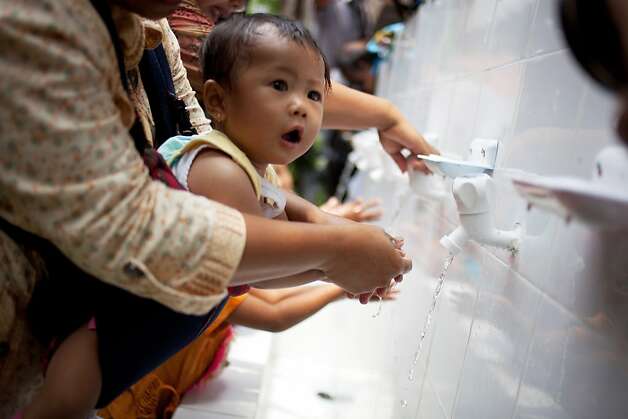
4.Wash your hands. No one touches your baby more than you do. Wash your hands frequently and if your child is old enough to touch anything wash their hands as well.


5.Avoid public places. Sounds cliche but most people do not know they are sick until it is too late. Restaurants and Christmas parties and germ cities. Keep your baby away from others at parties and if someone feels they absolutely must touch your baby have them touch their toes not their faces or hands.


6. Avoid letting baby touch these 6 germ magnets 

* Bed linens of someone who is ill
* Bathtubs
* Shopping cart handles
* Playgrounds
* Carpets
* Kitchen Sink


6. Go outside away from recirculated air and allow the sun to hit their skin. Vitamin D from sunlight is a top immunity booster.


10. Ditch the pacifier. I never encourage the use of pacifiers but if your baby needs one consider stopping after 6 months when the babies biological need to suck goes down significantly. As hard as we try it is difficult to keep pacifiers clean and free from germs.


12. Avoid well baby visits. If you are planning on not immunizing and don't have any exact concerns you want the doctor to address avoid well baby visits because it exposes the baby to an entire room of sick children.


13. Say no to antibiotics- most illnesses are viruses and antibiotics does no good. Consider using probiotics to build your baby's immunity instead by filling his gut with germ fighting positive bacteria. Breastmilk naturally contains probiotics but you can also give your baby additional powdered probiotics.


Saturday, November 3, 2012

St. George Magazine Article July 2012


What can you do during your 20’s and 30’s to reduce your Chances of Breast Cancer?

According to the Centers for Disease Control and Prevention, breast cancer is the second most commonly diagnosed cancer among American women. Less than 0.5 percent of women will get breast cancer before age 39. Your 20’s and 30’s are prime time for preventative measures to help keep your risk as low as possible continuing into your 40’s and beyond. Here are things you can control to help keep your risk low:
  • Maintain a healthy weight. Staying trim doesn't just look good-it helps reduce your risk of breast cancer. Excess fat can increase the amount of estrogen your body produces which can increase your chances of breast cancer.
  • Watch your alcohol intake to no more than one drink per day.  Three drinks per day increases your rate by 50%
  • Consider avoiding soy. There is conflicting evidence about whether soy increases your chances of breast cancer due to its pseudo-estrogenic effect. It might be better just to avoid it until we know more.
  • Consider a non- hormonal birth control method. The available data about hormonal contraceptives containing estrogen, suggests a slightly increased risk, so consider whether the benefits of the pill outweigh the risk of taking it. If you have a family history of breast cancer, for example, you may want to choose a different form of birth control.
  • Have a baby if that is something you would like to do. Women who have a child before the age of 30 have a slightly lower chance of breast cancer. Your breasts complete their development after a first pregnancy, which makes them less sensitive to carcinogens, or cancer-causing substances.
·         Breastfeed your babies. Research shows that your breast cancer risk is reduced by 7% with each baby and another 4.3% for each 12 months she breastfeeds.  If you have a family history of invasive premenopausal breast cancer nursing your baby can reduce your risk by as much as 60%
  • Check out your family history. The biggest risk for breast cancer is genetics. If you have certain genetic mutations, called BRCA1 or BRCA2, you're at much higher risk for developing the disease. 20 to 30 % of women with this gene will develop breast cancer by the age of 40 and 50% will by the age of 50. A simple but expensive blood test, $3,100, can tell you if you are a carrier. There are also significant emotional and psychological consequences of testing to consider as well as the risk of discrimination by insurance companies if you do have the genetic abnormality so keep those in mind.
  • Consider getting a breast thermography exam which takes a Digital Infrared Image of your breast. It is based on the principle that metabolic activity and vascular circulation in both pre-cancerous tissue and the area surrounding a developing breast cancer is almost always higher than in normal breast tissue. They compare the image from year to year and it can help detect breast cancer much earlier than a traditional mammogram. A thermography exam does not replace a mammogram for those of the appropriate risk group or age range but it can provide even more information about the health of your breast tissue.
DyAnna Gordon BS,CPM,LDEM is a Southern Utah native, wife and mother of four and  a Licensed Certified Professional Midwife serving Southern Utah and providing homebirth and birth suite services as well as herbal and nutritional counseling, and breast feeding support.